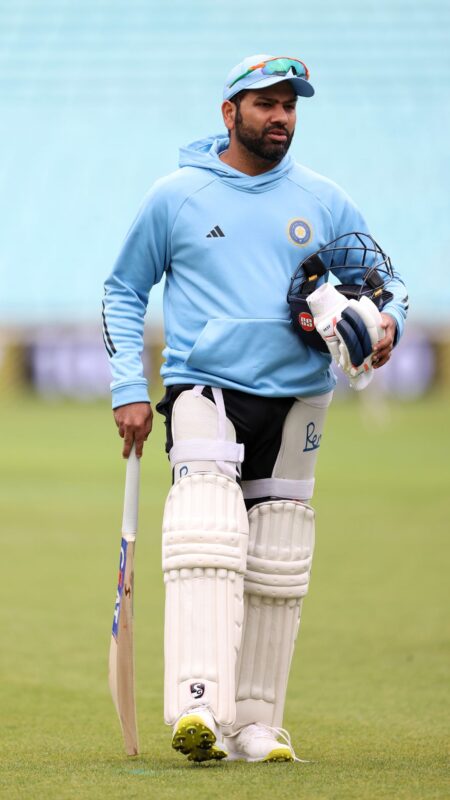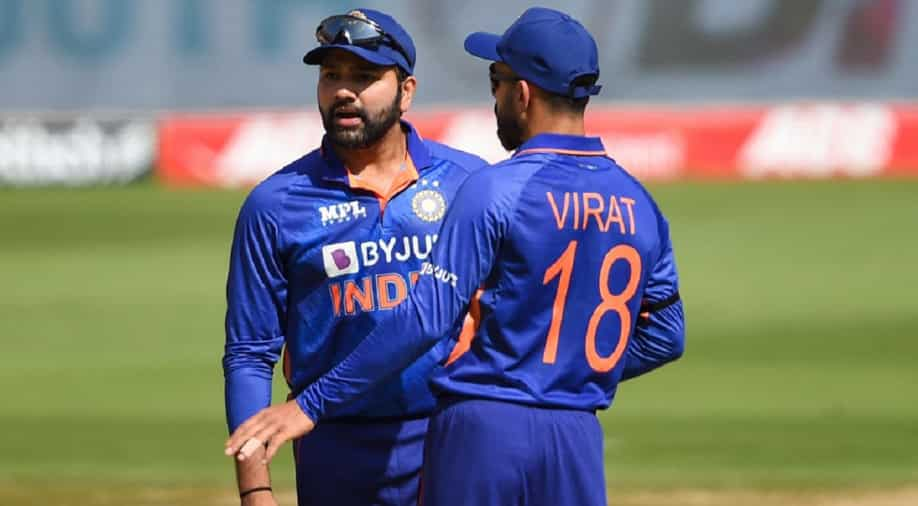
India’s cricket captain, Rohit Sharma, recently opened up about the absence of himself and Virat Kohli from the T20I format since the last year’s T20 World Cup. While speaking at an event, Rohit shared insights into the team’s strategy to manage player workloads ahead of the upcoming major cricket tournaments.
A Strategic Decision for Player Workload: Rohit Sharma revealed that the decision to step away from T20Is was a strategic one, aimed at ensuring players remain fresh and fit for crucial upcoming tournaments. He emphasized that just as last year, the senior players missed ODI cricket due to the T20 World Cup, this year, they are skipping T20s in preparation for the imminent 50-over World Cup.
Ravindra Jadeja Also Not Playing: Rohit pointed out that the absence from T20Is wasn’t limited to him and Kohli. He highlighted that even all-rounder Ravindra Jadeja was not participating in the ongoing T20Is against West Indies. He stressed that the focus shouldn’t solely be on him and Kohli, as the team is collectively making efforts to manage player fitness and prevent injuries in the lead-up to crucial tournaments.
Focus on World Cup Preparations: As India gears up for the upcoming World Cup, Rohit Sharma emphasized the importance of maintaining the players’ physical well-being. The skipper expressed concern over the frequent injuries that have plagued the team and stated that the priority is to ensure all key players are in prime condition for the major events.
Consultation with BCCI: Rohit disclosed that the team management had engaged in discussions with the Board of Control for Cricket in India (BCCI) regarding player workload management. The aim is to strike a balance between giving players adequate rest and ensuring their active participation in key tournaments. He affirmed the team’s commitment to preventing players from missing out on significant cricketing events due to injuries.
Conclusion: Rohit Sharma’s candid revelation sheds light on the team’s proactive approach to managing player workloads and injury prevention. As India looks forward to important cricketing tournaments, including the upcoming ODI World Cup, this strategic decision aims to keep the team’s star players in optimal condition, contributing to India’s success on the global stage.